SWOT analysis - (Strengths, Weaknesses, Opportunities, Threats).
SWOT analysis
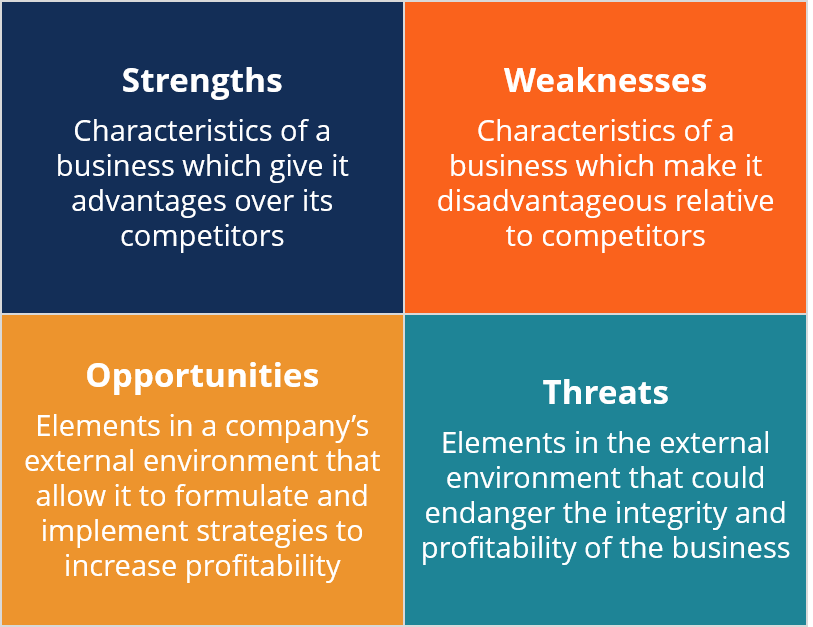
SWOT analysis (or SWOT matrix) is a strategic planning technique used to help a person or organization identify strengths, weaknesses, opportunities, and threats related to business competition or project planning.
This technique, which operates by 'peeling back layers of the company is designed for use in the preliminary stages of decision-making processes and can be used as a tool for evaluation of the strategic position of organizations of many kinds (for-profit enterprises, local and national governments, NGOs, etc. It is intended to specify the objectives of the business venture or project and identify the internal and external factors that are favorable and unfavorable to achieving those objectives. Users of a SWOT analysis often ask and answer questions to generate meaningful information for each category to make the tool useful and identify their competitive advantage. SWOT has been described as the tried-and-true tool of strategic analysis, but has also been criticized for its limitations.

Always have a purpose in mind when conducting a SWOT analysis. For example, study the external threats to your business, and see how learning from these can help you overcome internal weaknesses. This should tie back in to your business and marketing objectives – strengths should be promoted, opportunities should be sought out, while threats and weaknesses should be minimized as much as possible. A SWOT analysis is part of a situational analysis and identifies the key issues that direct the marketing strategy.
Comments
Post a Comment